
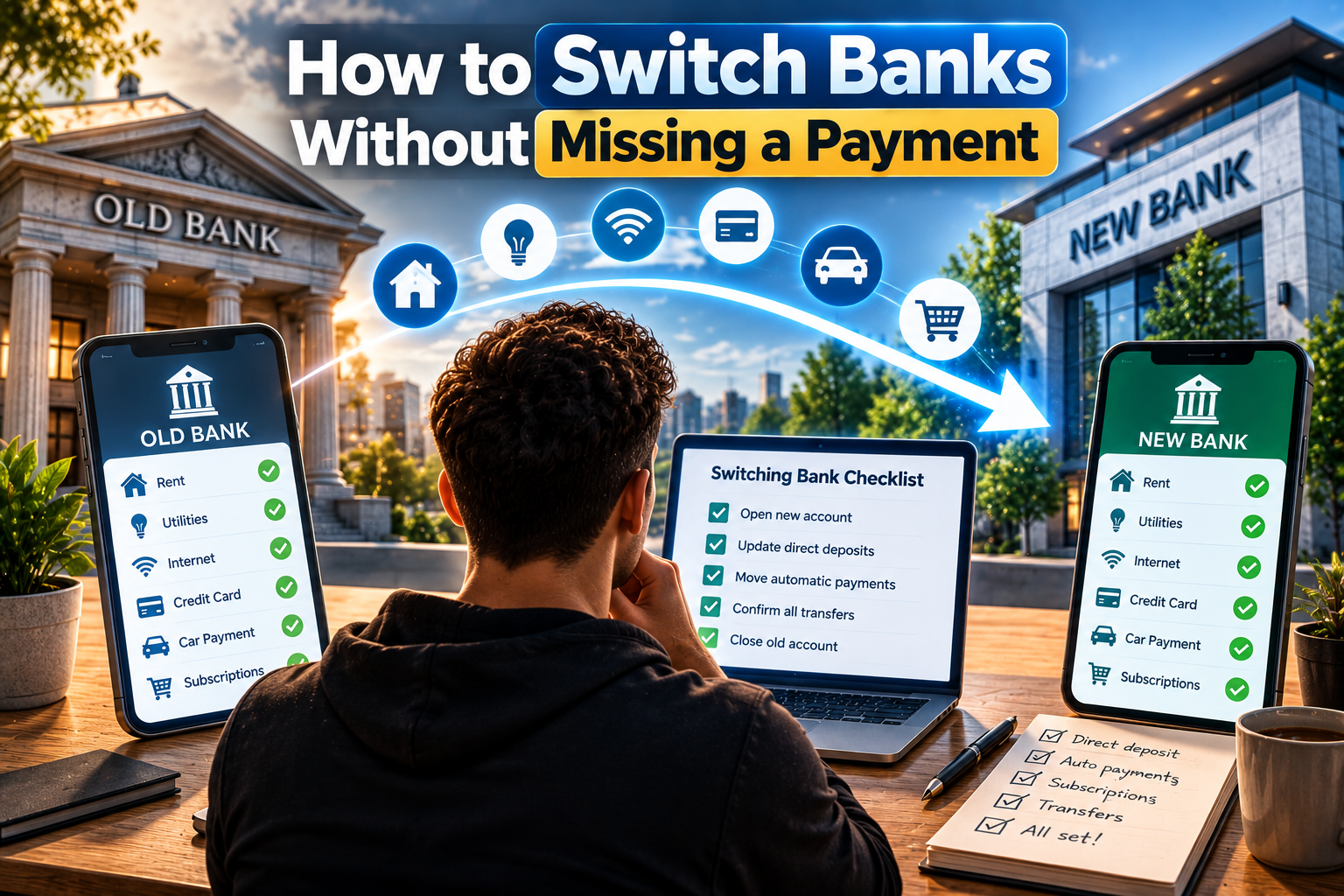
Steps based on the CFPB’s checklist for moving a checking account, checked on October 20, 2026.
Switching banks can save you real money — a checking account with no monthly fee, or a savings account paying 3% or more instead of almost nothing. What stops most people is the hassle of moving direct deposits and automatic payments without anything bouncing. With a simple plan, it’s easier to switch banks than it looks. This guide follows the steps recommended by the Consumer Financial Protection Bureau.
Table of Contents
Before You Switch Banks: Choose the Right New Account
Compare accounts on the things that will actually affect you:
- Fees: monthly fees and how to avoid them, overdraft fees, ATM fees and wire fees
- Access: branches, ATM network, mobile app and whether you can deposit cash
- Interest: what the savings account pays, and what it takes to earn the top rate
- Minimums: opening deposits and minimum balances
Our best bank accounts guide and best online banks guide compare current fees and rates checked on each bank’s website. Also check what ID and information the new bank needs to open an account.
Step 1: Open the New Account First
Don’t close anything yet. Open the new account, fund it with a small amount, and set up online banking and the mobile app. Order a debit card and checks if you need them.
Step 2: List Every Deposit and Automatic Payment
The CFPB suggests you “include all the automatic deposits and withdrawals” that go through your current account. Go through two or three months of statements and write down:
- Paychecks and other direct deposits (government benefits, pensions, side income)
- Bills paid automatically from your account (rent, utilities, phone, insurance, loans)
- Subscriptions charged to your debit card
- Recurring transfers to savings, investments or other people
- Payment apps linked to your account
Step 3: Move Your Direct Deposits
Give your employer and any other payers your new routing and account numbers, usually through a direct deposit form or your payroll portal. Ask when the change will take effect — it can take one or two pay cycles.
Step 4: Move Automatic Payments After the First Deposit Arrives
Once you know when money will start arriving in the new account, switch your automatic payments and card subscriptions to it, scheduled after that date. Then cancel the old automatic payments so nothing gets paid twice.
Step 5: Leave a Cushion in the Old Account
Keep enough money in the old account to cover checks that haven’t cleared and payments you might have missed. The CFPB notes this helps you avoid “overdrafts, fees for dipping below your minimum balance, or having checks or debits returned.” Watch the old account for a full statement cycle or two.
Step 6: Move the Rest of Your Money
When everything is running through the new account and nothing has hit the old one for a while, transfer the remaining balance electronically, by check or with a cashier’s check.
Step 7: Close the Old Account in Writing
Ask the old bank to close the account and request written confirmation. Download any statements you might need later, such as for taxes, because you may lose online access after closing.
Common Mistakes to Avoid
- Closing the old account too early. A forgotten annual subscription or a late check can overdraw it.
- Forgetting annual or quarterly bills. Insurance and memberships may not show up in your last couple of statements.
- Leaving a balance below the minimum. Some banks charge a monthly fee if the balance drops too low, even while you’re closing it.
- Not updating payment apps and online stores that have your old card or account saved.

Frequently Asked Questions
How long does switching banks take?
Opening a new account can take minutes, but moving direct deposits and automatic payments usually takes a few weeks. Plan for at least one full pay cycle.
Will switching banks hurt my credit score?
Opening or closing a checking or savings account usually doesn’t affect your credit score. Some banks may check your ChexSystems report when you apply.
Can I keep my old account open?
Yes. Some people keep a small account at their old bank for branch access or cash deposits. Just make sure it won’t charge a monthly fee.
Bottom Line
To switch banks safely, open the new account first, move deposits before payments, keep a cushion in the old account for a cycle or two, and only then close it in writing. Following that order is what makes switching banks painless.
This article is for informational purposes only and is not financial advice. BankNavigatorr has no affiliate relationships with any bank and is supported by advertising.